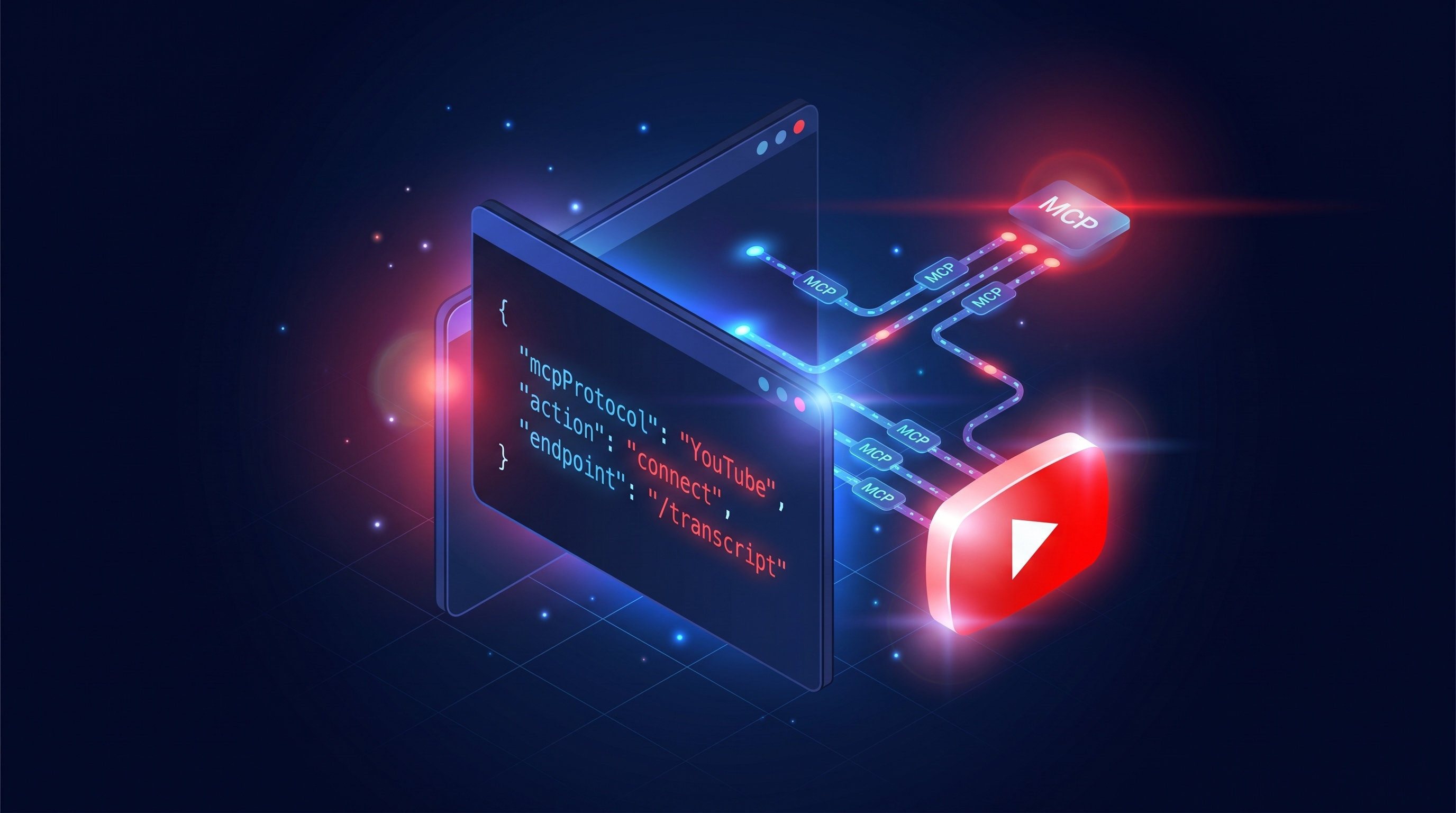

How to connect YouTube with Hermes Agent
Hermes Agent's whole pitch is "the agent that grows with you." It learns. It remembers. It writes its own skills.
But ask it about a YouTube video and it goes silent.
That silence is a problem. YouTube has more than 800 million videos, and almost every one of them carries a transcript. A clean text layer your agent could read, summarize, search, and remember. Without access to it, you're running a learning agent that's deaf to the largest spoken-knowledge archive on the internet.
This guide shows you how to connect YouTube with Hermes Agent in about ten minutes using TranscriptAPI as a skill.
Why your agent needs YouTube

Most people think of YouTube as video. It isn't. Not for an agent.
For Hermes, YouTube is text. Every podcast episode is a transcript. Every conference talk is a transcript. Every tutorial, interview, product launch, and earnings call recap. That's the raw material of human reasoning, encoded in spoken language, sitting behind a video player.
If your agent can read it, it can learn from it.
If it can't, you've drawn a line through half the internet.
What "connect YouTube with Hermes Agent" actually means
Hermes Agent doesn't ship with native YouTube access. There's no built-in watch_youtube tool. The agent runs on your VPS, your Mac mini, or your serverless infra, and it can do anything you give it a skill for. Out of the box, that doesn't include video.
So when we say "connect YouTube with Hermes Agent," we mean three things:
- Give Hermes a way to fetch a transcript from any YouTube URL.
- Give it a way to search YouTube and browse channels.
- Wire those into a skill so Hermes can call them autonomously.
That's the work. The rest is plumbing.
Why scraping YouTube directly is the wrong move
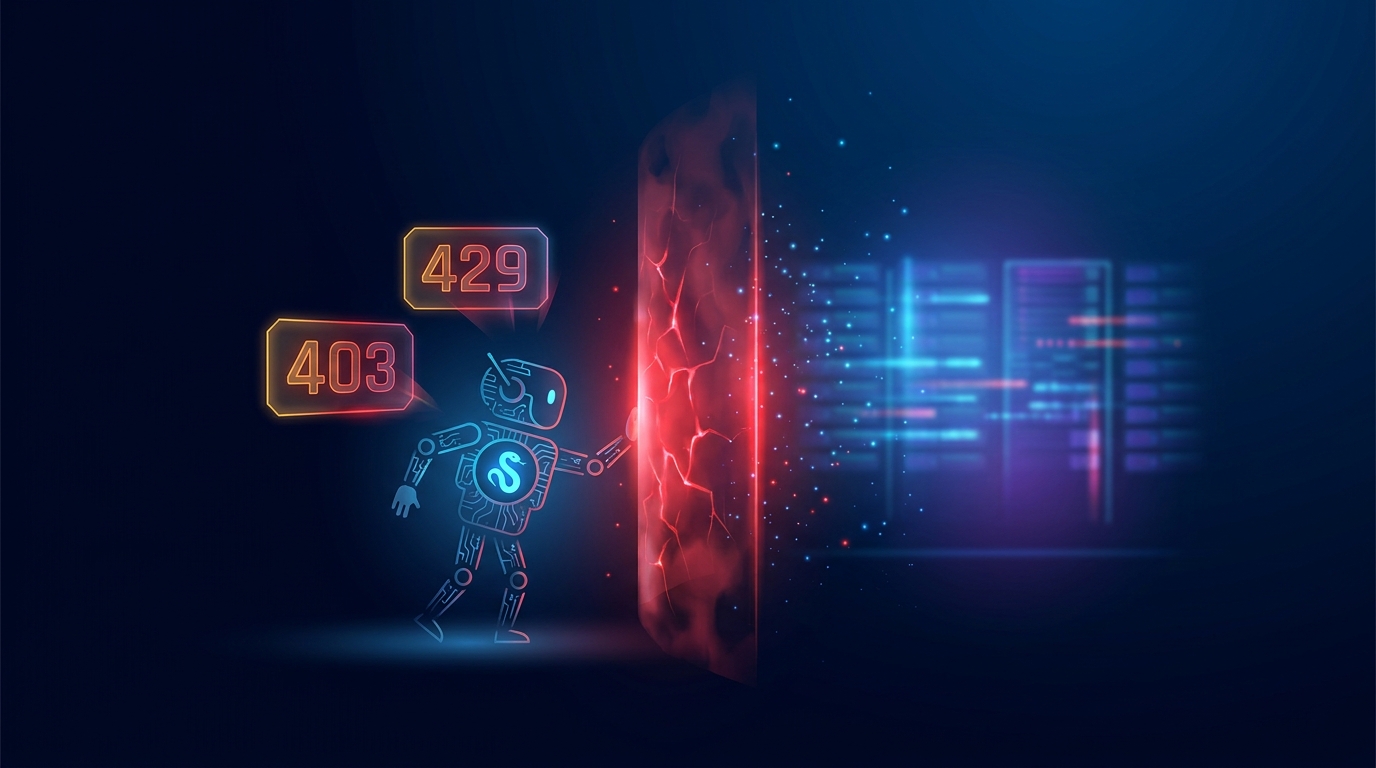
The first instinct is usually wrong: write a Python script that hits YouTube's transcript endpoint and parse it yourself.
Don't.
YouTube blocks raw scrapers aggressively. Cloud IP ranges (AWS, Hetzner, DigitalOcean, which is exactly where Hermes Agent likes to live) get rate-limited or banned within minutes. Your skill works for a day, then mysteriously stops. Your agent reports failures it can't explain. You spend a weekend rotating proxies instead of building.
I've watched this play out for indie devs more times than I can count. They start with a 50-line scraper. They end with an infrastructure problem.
The faster path is an API that already solved that problem at scale.
Enter TranscriptAPI
TranscriptAPI is a single REST endpoint that returns YouTube transcripts, search results, channel video lists, and playlists. One Bearer token. One HTTP GET. About 49ms median response time.
It processes 15 million transcripts a month, so the blocking problem is somebody else's job.
For Hermes, that means the YouTube skill becomes about thirty lines of glue code instead of a recurring war with YouTube's anti-bot systems.
What you'll need before you start
Three things. That's it.
- A running Hermes Agent instance (CLI, Telegram, Discord, or any interface)
- A TranscriptAPI key (you can grab one with 100 free credits, no card)
- Five to ten minutes
If Hermes is already serving you on Telegram or Slack, even better. The skill we're about to build will work everywhere Hermes already runs.
Step 1: Get your TranscriptAPI key
Head to transcriptapi.com and sign up. The free tier gives you 100 credits. Enough to test the integration, pull a few hundred transcripts, and decide whether you want to upgrade. No credit card on signup.
Each successful transcript fetch costs 1 credit. Failed requests cost zero. That math matters when you're building a skill that an autonomous agent might call dozens of times in a session.
Copy your key. Set it as an environment variable on the machine where Hermes runs:
export TRANSCRIPTAPI_KEY="your_key_here"
Don't paste it into your skill file. Hermes can rewrite skills on its own. You don't want your key getting committed to memory and surfaced later.
Step 2: Define the skill
Hermes skills are small modules that describe a capability and how to invoke it. The exact format depends on your Hermes version, but the contract is simple: a name, a description the agent can reason over, and the action it performs.
For YouTube, you want a skill that exposes four operations:
- Get a transcript from a video URL
- Search YouTube for videos by topic
- List videos from a channel
- Pull every video in a playlist
All four map to TranscriptAPI endpoints. The HTTP shape looks like this:
curl "https://transcriptapi.com/api/v2/youtube/transcript?video_url=VIDEO_ID&format=text" \
  -H "Authorization: Bearer $TRANSCRIPTAPI_KEY"
That's the entire transcript fetch. Drop it inside whatever wrapper your Hermes runtime expects (Python function, TypeScript handler, or shell script. Hermes doesn't care), then register it as a skill.
Step 3: Wire the skill into Hermes
When you load the skill, give Hermes a description it can actually reason about. This is the part most people get wrong.
A bad description: "Calls TranscriptAPI."
A good description tells the agent exactly when to use the skill:
"Fetches the full text transcript of any YouTube video. Use whenever the user shares a YouTube URL, asks about a video's content, asks for a summary or quote from a video, or asks to research a creator's work."
Hermes uses that text to decide when to call your skill autonomously. The richer the description, the smarter the agent looks.
Step 4: Test it from wherever you talk to Hermes
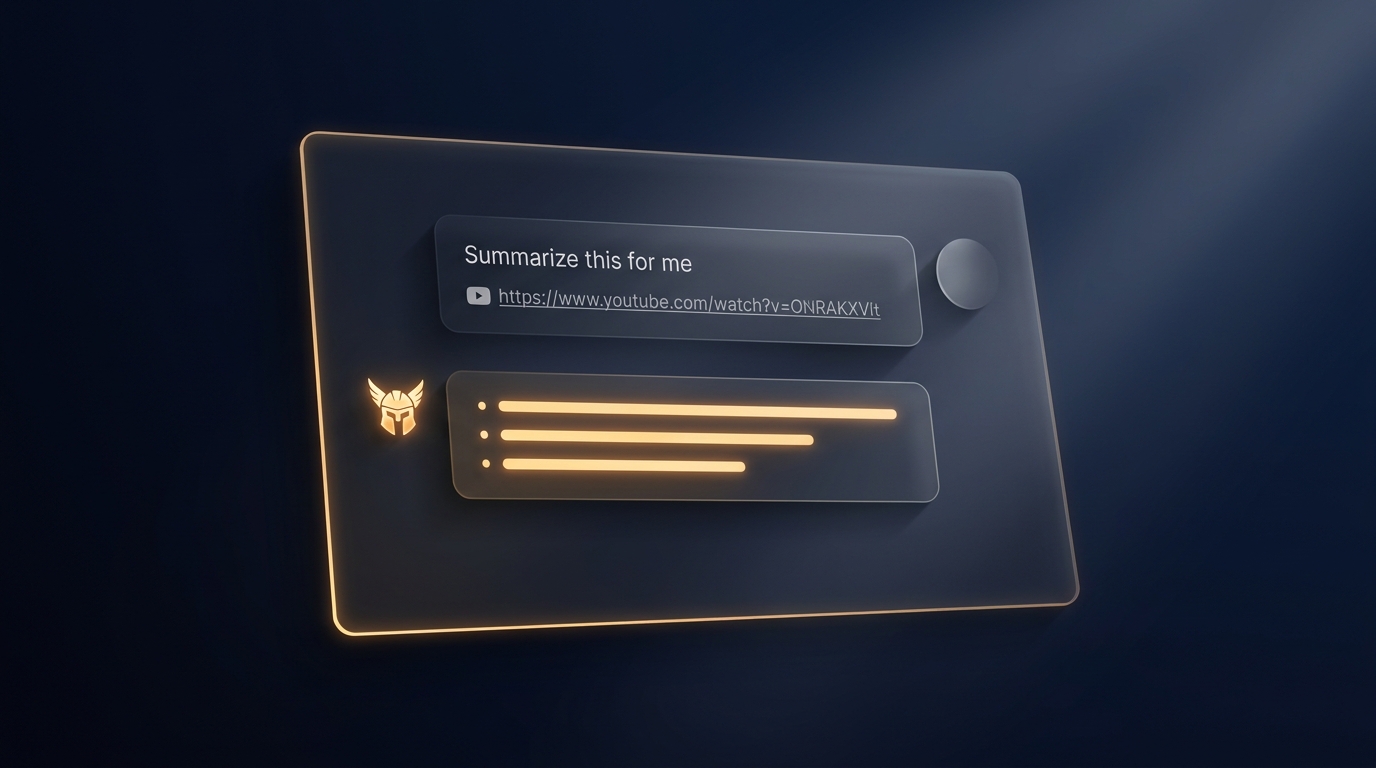
This is the moment that makes the work worth it.
Open whichever interface you use to talk to Hermes. Telegram, Discord, the CLI, whatever. Paste a YouTube link with a simple instruction:
"Summarize this for me: youtu.be/dQw4w9WgXcQ"
If everything's wired correctly, Hermes recognizes the URL, calls the YouTube skill, gets the transcript back, and answers in under two seconds. Not because it watched the video — because it read it. That distinction is the entire trick.
That's the whole game. You just gave a self-hosted, always-on AI agent the ability to read YouTube.
The endpoints Hermes will actually use
You don't need to expose every TranscriptAPI endpoint to Hermes on day one. Start with these four:
GET /youtube/transcript: the workhorse, 1 credit per callGET /youtube/search: find videos when the user describes a topic, 1 creditGET /youtube/channel/videos: pull a channel's full catalog, 1 credit per ~100 videosGET /youtube/channel/latest: free RSS endpoint for monitoring new uploads
Add playlist/videos later when you want playlist support. Add channel/search once Hermes starts asking questions like "find videos in this channel about prompt caching."
The pattern that makes this dangerous (in a good way)
Here's where Hermes Agent gets interesting compared to a stateless chatbot.
Hermes has persistent memory. It remembers. So once you give it YouTube access, it doesn't just answer your one question. It starts building a long-term model of the YouTube world that matters to you.
You ask it to summarize a Lex Fridman interview on Tuesday. On Friday, you ask "what did that guest say about consciousness?" and Hermes already knows. It read the transcript three days ago, stored what mattered, and never had to re-fetch.
A few patterns that get powerful fast:
- Subscribe Hermes to a list of channels using
channel/latestand have it auto-summarize new uploads each morning - Build a personal "second brain" of every YouTube video you've ever shared with the agent
- Let Hermes search across past video transcripts the same way it searches your conversations
- Have Hermes flag claims from new videos that contradict what an earlier video said
None of that works without the YouTube skill. All of it works once you've got it.
What changes about your day

Most of the time, integrations are abstract. This one isn't. You feel the difference inside a week.
You stop saving videos to "watch later" lists you'll never open. You forward links to Hermes instead. By Friday, the agent hands you a digest of every video you sent it Monday through Thursday, with the parts that mattered pulled out and the rest discarded.
You stop opening YouTube to research a topic. You ask Hermes, and it goes and watches for you while you're doing something else.
That shift sounds small. It isn't. It's the difference between an assistant you check in on and one that's working in the background, all the time, on the things you actually care about.
What this costs in plain English
Most developers worry about the bill before they worry about the build. Fair enough.
Here's the math. A normal Hermes session that touches YouTube might pull two or three transcripts. Three credits. At the $5 monthly tier, you have enough credits to handle dozens of sessions a day before you hit a ceiling.
If your agent goes wild and starts processing entire channels, you'll burn credits faster, but the failed-requests-are-free rule means you don't pay for retries when YouTube is flaky.
For most self-hosters, the YouTube skill costs less per month than the VPS Hermes runs on.
Failure modes worth handling
Don't ship the skill without telling Hermes how to handle errors. The agent will run into them, and you want it to recover gracefully rather than apologize and stop.
Three errors matter most:
- 402 Payment Required. You're out of credits. Hermes should tell you, not silently fail.
- 404 Not Found. Some videos have no transcript (private, removed, or no captions). Hermes should fall back to metadata or just say so.
- 429 Rate Limited. Respect the
Retry-Afterheader. Hermes should wait, not retry instantly.
Bake those into the skill description so the agent knows what to do when reality pushes back.
How to put this into action
If you want to ship this today, here's the order to do it in:
- Sign up at transcriptapi.com and grab a free key.
- Set the key as an environment variable where Hermes runs.
- Write a small wrapper that calls
GET /youtube/transcriptand returns text. - Register it as a Hermes skill with a clear description.
- Test from your usual Hermes interface with a real YouTube URL.
- Add the search and channel endpoints once the basic skill works.
- Let Hermes loose on a backlog of videos you've meant to watch.
By step seven, you've quietly turned your agent into a YouTube research assistant that runs while you sleep.
The bottom line
You can't have a learning agent that can't see one of the largest knowledge sources on the internet. It's a contradiction. An agent that grows with you needs to grow on what you actually consume. And most of us consume a lot of YouTube.
The fix is small. A free key, a thirty-line skill, a description Hermes can reason over. Ten minutes of work, and your agent stops being blind.
The question is what you'll have it watch first.
Frequently Asked Questions
- Why doesn't Hermes Agent have YouTube access out of the box?
- Hermes Agent ships without a built-in YouTube tool. It's designed to be extensible — it can do whatever you give it a skill for — and YouTube access simply isn't one of the defaults. That's a real gap: YouTube is the world's largest spoken-knowledge archive, and a learning agent that can't reach it is effectively drawing a line through half the internet.
- Why shouldn't I write a Python scraper for Hermes Agent to call YouTube directly?
- Because Hermes Agent usually runs on cloud infrastructure — a VPS, Mac mini, or serverless host — and cloud IP ranges like AWS, Hetzner, and DigitalOcean are exactly what YouTube rate-limits and bans within minutes. A 50-line scraper works for a day, then quietly stops as your cloud IP gets flagged, and you're left with an infrastructure problem instead of a feature.
- What does the TranscriptAPI skill give Hermes Agent, and how much code does it take?
- One REST endpoint with a Bearer token gives the agent transcript extraction (about 49ms median response time), YouTube search, channel video listing, and playlist support. Connecting it to Hermes Agent's skill framework takes roughly 30 lines of glue code, after which the agent can call any of those capabilities on its own whenever it needs video content to answer a question or finish a task.