YouTube transcripts for research: how academics and analysts use video data
YouTube transcripts for research: how academics and analysts use video data
There are over 800 million videos on YouTube. Every day, people upload 500 hours of new content per minute.
For researchers, that number should be exciting. Not overwhelming.
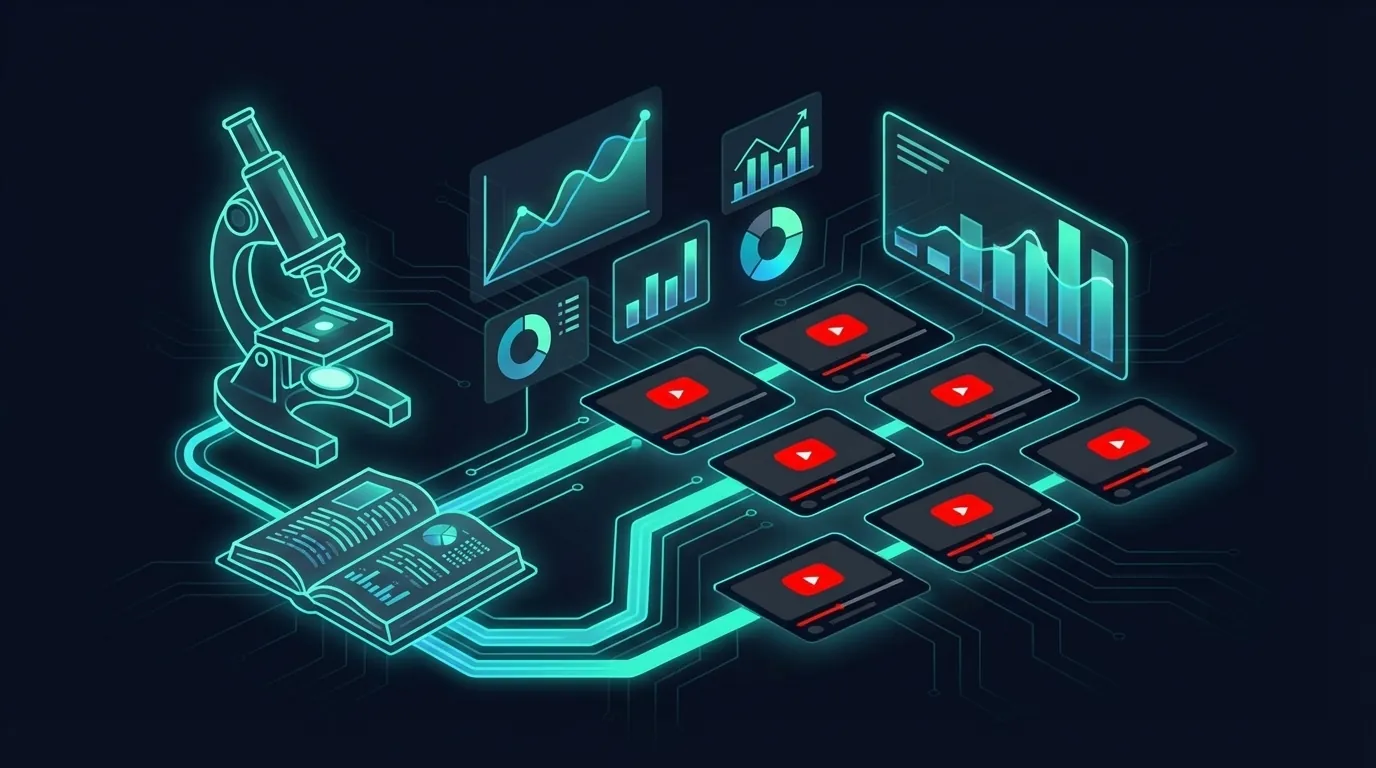
YouTube has quietly become one of the largest public archives of human speech ever created. Political debates, customer reviews, expert interviews, conference talks, street protests, product launches, therapy sessions, cooking tutorials. All of it captured on camera. All of it spoken out loud. And all of it available as text if you know how to extract it.
The problem? Most researchers still treat YouTube as something to watch, not something to study. They sit through hours of video, manually taking notes, pausing and rewinding.
What if you could turn thousands of videos into searchable text in minutes?
That's what a growing number of academics, market analysts, and journalists are already doing. Here's how they do it and why it works.
YouTube is the world's largest qualitative dataset
Think about what YouTube actually contains.
Every public figure speaks there. Customers leave unfiltered reviews. Teachers explain concepts for free. News anchors report events in real time. Activists organize. Doctors explain diagnoses. CEOs pitch their visions.
The numbers tell the story
YouTube has 2.7 billion monthly active users. The platform hosts content in over 80 languages. A 2023 Pew Research study found that 83% of U.S. adults have used YouTube, making it the most widely used social platform in the country.
For researchers, this means access to speech data at a scale that didn't exist 15 years ago. Traditional qualitative research might involve interviewing 20 people over six months. YouTube gives you thousands of voices in an afternoon.
But watching video doesn't scale. Reading text does.
That's where transcript extraction changes the game. A tool like TranscriptAPI converts video speech into structured text you can search, code, and analyze. One API call per video. One credit per transcript.
How academics use YouTube transcripts
Researchers across disciplines have started treating YouTube as a primary data source. The methods vary, but the starting point is the same: get the text out of the video.
Discourse analysis
Discourse analysts study how people construct meaning through language. YouTube is a goldmine for this.
A linguistics researcher at a state university told us they analyzed 400 videos from political commentators across the ideological spectrum. They extracted transcripts using TranscriptAPI's REST API, then ran the text through qualitative coding software to track framing patterns.
The result? They identified three distinct rhetorical strategies that correlated with channel size. That finding came from text, not from watching 400 videos.
Sentiment and content analysis
Want to know how people feel about a medical treatment? Search YouTube for patient testimonial videos. Extract the transcripts. Run sentiment analysis.
A 2022 study published in the Journal of Medical Internet Research did exactly this. Researchers analyzed YouTube videos about a specific medication, coding transcripts for misinformation and emotional tone. The study covered 200+ videos.
Here's what makes this powerful:
- YouTube comments show reactions. Transcripts show the source material that triggered those reactions.
- You can quantify language patterns across hundreds of speakers.
- Timestamps in transcripts let you pinpoint exactly when a claim was made.
Linguistic research
Sociolinguists study how language changes across communities. YouTube gives them access to natural speech from populations they could never visit in person.
Regional dialects. Code-switching between languages. Slang evolution. Gendered speech patterns. All documented on camera by millions of people who aren't performing for a research study. They're just talking.
Have you considered what 800 million videos of natural speech could reveal about how language actually works?
The practical workflow for academics
Most academic researchers follow a similar process:
- Define your research question and identify relevant YouTube channels or search terms
- Use TranscriptAPI's search endpoint to find videos matching your criteria
- Extract transcripts in bulk using the channel or playlist endpoints
- Import text data into your analysis tool (NVivo, ATLAS.ti, Python with NLTK, R with tidytext)
- Code, analyze, and publish
TranscriptAPI handles step 2 and 3. The /youtube/channel/videos endpoint returns paginated results at roughly 100 videos per page. The /youtube/transcript endpoint pulls the full text. At 49ms median response time, you can extract a dataset of 1,000 transcripts in under an hour.
Market research and competitive intelligence
Academics aren't the only ones paying attention. Market researchers have realized that YouTube contains something surveys can't capture: unscripted opinions.
Analyze what competitors actually say
Your competitor published 200 YouTube videos last year. What did they talk about? Which features did they emphasize? What objections did they address?
You could assign an intern to watch all 200. Or you could extract every transcript in 10 minutes and search the text.
Here's a real scenario. A SaaS company wanted to understand how three competitors positioned their products to small business owners. They pulled transcripts from all three channels using TranscriptAPI's channel endpoint. Then they searched for specific terms: "pricing," "enterprise," "small business," "free trial."
The patterns were obvious once the text was in front of them. One competitor never mentioned pricing. Another mentioned "enterprise" three times more often than "small business." That shaped their own positioning strategy.
Find customer pain points in review videos
Independent reviewers on YouTube say things your customers won't say in a survey. They test products on camera and react in real time. They compare you to alternatives. They point out flaws your team hasn't noticed.
Extract those transcripts. Search for your product name. Read what real users say when nobody from your company is listening.
Track industry trends over time
This is where bulk extraction gets interesting.
Pull transcripts from a set of industry channels every quarter. Compare the language. When did "AI" start appearing in every video? When did people stop saying "blockchain"? How did the conversation around remote work shift between 2020 and 2024?
Transcript data makes trend analysis concrete. You're not guessing what people talk about. You're measuring it.
What would your strategy look like if you could read every word your industry said on camera last year?
Journalism and media analysis
Journalists have a different problem. They need to find specific claims, verify quotes, and track how narratives spread across channels.
Fact-checking at scale
A political figure makes a claim during a YouTube interview. Did they say the same thing six months ago? Did they say the opposite?
Transcript search answers that question in seconds. Extract transcripts from their channel. Search for the topic. Compare statements across dates.
ProPublica and similar investigative outlets have used video transcripts to document contradictions in public statements. The method is straightforward:
- Identify the subject and their YouTube presence
- Extract all available transcripts
- Search for keywords related to the claim
- Compare statements chronologically
No more scrubbing through hours of footage hoping to find the right 30-second clip.
Tracking narratives across channels
How does a conspiracy theory spread? Where does a political talking point originate? Which channels amplify which messages?
Media researchers use transcript data to map information flow. They extract text from dozens of channels, tag common phrases or claims, and track when each channel first used specific language.
This kind of analysis was almost impossible five years ago. It required watching thousands of hours of video. Now it requires extracting text and running searches.
Political speech analysis
Election cycles generate massive volumes of YouTube content. Candidate speeches, rally footage, debate clips, supporter channels, opposition commentary.
Researchers at Stanford and MIT have published studies analyzing political speech on YouTube. The data source is always the same: transcripts converted to text and then analyzed computationally.
For a complete walkthrough of extracting transcripts from multiple videos, see our guide to extracting transcripts programmatically.
How to extract transcripts for research
The technical process is simple. The ethical considerations matter more.
Using TranscriptAPI for bulk extraction
TranscriptAPI is built for exactly this kind of work. The API processes over 15 million transcripts per month with a 49ms median response time.
Here's what the research workflow looks like in practice:
Find your videos:
GET /youtube/search?q=your+research+topic
GET /youtube/channel/videos?channel=CHANNEL_URL
GET /youtube/playlist/videos?playlist=PLAYLIST_URL
Extract transcripts:
GET /youtube/transcript?video_url=VIDEO_URL
Pricing for research budgets: - 100 free credits to test your methodology (no credit card) - $5/month for 1,000 credits on the starter plan - Top-up credits available for larger datasets - Rate limit of 200-300 requests per minute handles most research needs
A dataset of 500 videos costs roughly $2.50 in API credits. That's less than a single journal article access fee.
IRB and ethical review considerations
If your research involves human subjects, your Institutional Review Board needs to weigh in. YouTube content is technically public, but "public" doesn't always mean "fair game" for research.
Key questions your IRB will ask:
- Identifiability: Can individuals be identified from the data? Video creators usually can be.
- Expectation of privacy: Did the speaker reasonably expect their content to be studied? A public political speech differs from a personal vlog.
- Vulnerable populations: Are you studying minors, patients, or other protected groups?
- Consent: Most IRBs treat public YouTube data as exempt from consent requirements, but check your institution's specific policies.
Document your data collection methods. Save your API calls and parameters. This makes your methodology reproducible and your review board happy.
Fair use and copyright
Transcripts are derivative works. In the U.S., fair use analysis considers four factors: purpose, nature of the work, amount used, and market effect.
Academic research with proper citation generally falls under fair use. Market research for commercial purposes has a weaker claim. Journalism sits somewhere in between.
Best practices:
- Cite the original video with URL, creator name, and upload date
- Use transcripts for analysis, not republication
- Quote selectively in your findings rather than reproducing full transcripts
- Keep raw transcript data in secure storage with appropriate access controls
Citation format
No standard citation format exists for YouTube transcripts, but this structure works for most style guides:
> Creator Name. "Video Title." YouTube, uploaded by Channel Name, date. URL. Transcript extracted via TranscriptAPI.
Including the extraction method helps other researchers replicate your work. That's good science.
Does your research require working with YouTube transcripts in multiple languages? TranscriptAPI returns English when it's available and otherwise the video's first available language, unless you pass the language parameter, which also lets you request auto-generated captions.
Frequently asked questions
Is it legal to use YouTube transcripts for research?
YouTube's Terms of Service restrict automated data collection, but transcript extraction for research purposes generally falls within acceptable use. Academic fair use protections apply in most jurisdictions. Check your institution's data governance policies and consult your IRB for human subjects research.
How many transcripts can I extract at once?
TranscriptAPI supports 200-300 requests per minute. For a dataset of 5,000 videos, you could extract all transcripts in roughly 20-25 minutes. The /youtube/channel/videos and /youtube/playlist/videos endpoints return up to 100 videos per page, making it fast to build your video list before extraction.
Do I need coding skills to use TranscriptAPI?
Basic familiarity with API calls helps, but you don't need to be a developer. Tools like Postman let you make API requests without writing code. For larger datasets, a simple Python script handles pagination and batch extraction. Our complete guide to YouTube transcripts walks through both approaches.
What format do transcripts come back in?
TranscriptAPI returns structured JSON with the full transcript text plus individual segments with timestamps. This format works directly with text analysis tools, and the timestamps let you reference specific moments in the source video.
Can I use transcript data in published research?
Yes. Cite the original videos as your data source and describe your extraction methodology. Include your search parameters, date range, and sample selection criteria. This makes your research reproducible and meets journal requirements for transparency.
How accurate are YouTube transcripts?
Auto-generated captions typically reach 85-95% accuracy for clear English speech. Accuracy drops with heavy accents, technical jargon, or background noise. Many channels upload manually corrected captions, which are more reliable. TranscriptAPI returns manually uploaded captions when available, falling back to auto-generated ones otherwise.
Start extracting research data today
YouTube holds more qualitative data than any single archive, library, or survey platform. The barrier was never access. It was format.
Transcripts remove that barrier. They turn video into text you can search, code, analyze, and cite.
Whether you're a grad student building a dissertation dataset, a market analyst tracking competitor messaging, or a journalist fact-checking public statements, the workflow is the same. Find the videos. Extract the text. Do the analysis.
Extract research data at scale with TranscriptAPI. 100 free credits, no credit card required. Your first dataset is 10 minutes away.
What research question would you answer if you could search the text of every YouTube video on a topic?
Frequently Asked Questions
- How are academics actually using YouTube transcript extraction for qualitative research?
- One linguistics researcher analyzed 400 political-commentary videos by extracting their transcripts through TranscriptAPI's REST API and running the text through qualitative coding software to track framing patterns — surfacing three distinct rhetorical strategies that correlated with channel size, all from reading text rather than watching 400 videos. Other fields use the same approach for sentiment analysis of patient testimonials, media studies of political speech, and market research on product-category reviews.
- What scale of YouTube data can a researcher realistically work with?
- YouTube has about 2.7 billion monthly active users and hosts content in over 80 languages. With a YouTube transcript API a researcher can extract thousands of transcripts in an afternoon, versus the months traditional qualitative work takes — often around 20 interviews over six months. It's a genuine shift in scale: instead of interviewing 20 people, you can analyze thousands of voices in an afternoon.
- What ethical guidelines should researchers follow when using YouTube transcripts?
- Treat public videos as potentially sensitive even when technically public, since creators didn't consent to being research subjects; consider anonymizing identifiers when you publish findings; follow the platform's terms of service; and hold individual creators to a different standard than broadcast media. Large news channels and public broadcasts carry different ethical norms than personal vlogs or small-creator content.