
What is agentic AI architecture? The developer's guide to multi-agent systems in 2026
Remember when everyone was breaking monoliths into microservices? Same pattern. Different decade. Different technology.
Right now, developers are building AI apps the same way we built software in 2010. One giant agent tries to do everything. It searches the web, writes code, manages databases, sends emails, and analyzes data. All in one process. All in one prompt chain.
It breaks. A lot.
This guide covers what agentic AI architecture actually is, why multi-agent systems work better, and how to build one without overengineering it.
You've already seen this movie
If you were around for the microservices revolution, the pattern will feel familiar.
Monoliths worked fine at first. Then they didn't. A single change in one module broke three others. Deployments took hours. Scaling meant scaling everything, even the parts that didn't need it.
So the industry split monoliths into smaller, focused services. Each one owned a single responsibility. They communicated through well-defined APIs. Teams could deploy independently.
Gartner reported a 1,445% surge in multi-agent system inquiries between Q1 2024 and Q2 2025. That's not a typo. Developers are hitting the same wall with AI that they hit with software a decade ago.
And they're reaching for the same solution: break it apart.

What agentic AI architecture actually means
Strip away the buzzwords and here's what you get.
Agentic AI architecture is a system where multiple specialized AI agents work together. Each agent has a clear job. Each agent has its own tools. And a coordination layer manages how they talk to each other.
Think of it like a team, not a tool.
Instead of one agent that "does AI," you get:
A research agent that finds and summarizes information
A writing agent that creates content
A data agent that pulls numbers from APIs and databases
A scheduling agent that handles timing and recurring tasks
An orchestration layer that decides who does what, and when
The orchestration layer is the part most teams get wrong. More on that in a minute.

Why single-agent systems fall apart
I've watched this happen over and over. A team builds a proof-of-concept with one agent. It works great on demos. Then they ship it to production.
Within a week, the problems start.
The agent's context window fills up because it's juggling too many responsibilities. It hallucinates more often because it's switching between unrelated tasks. And debugging becomes a nightmare because you can't tell which "part" of the agent broke.
One team I talked to spent three weeks debugging an issue where their "do-everything" agent kept confusing customer support data with marketing analytics data. Same agent, same context, different jobs bleeding into each other. They split it into two agents in an afternoon. Problem gone.
Here's the core issue: a single agent accumulates complexity the same way a monolith does. Every new capability you add makes every existing capability less reliable.
Sound familiar?
The microservices parallel, applied to agents
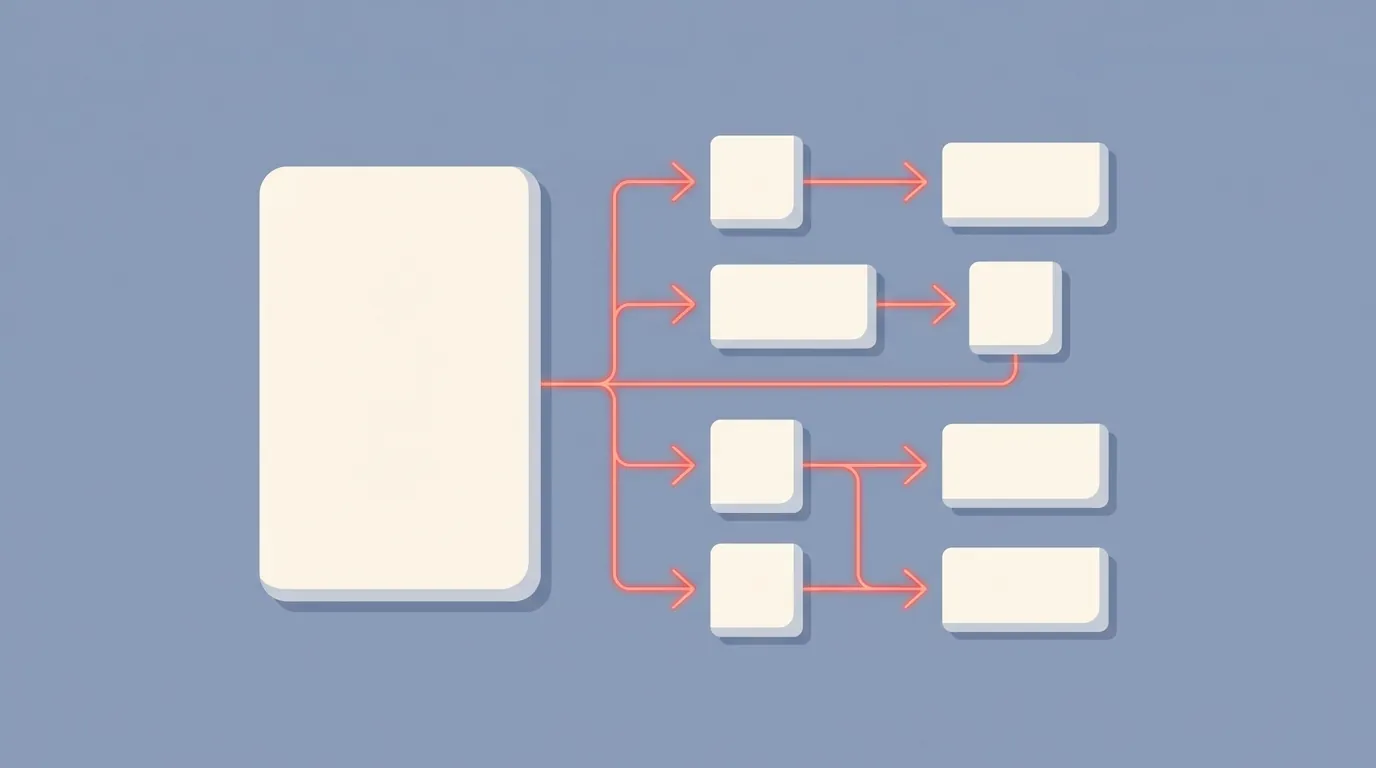
The mapping is almost 1:1. Here's how the concepts translate:
Microservices conceptMulti-agent equivalentServiceSpecialized agentAPI contractAgent communication protocolService meshOrchestration layerService registrySkill/capability discoveryShared databasePersistent memoryMessage queueDelegation systemKubernetesAgent orchestration platform
This isn't a loose analogy. It's the same architectural pattern applied to a new substrate.
The autonomous AI agent market is projected to hit $8.5 billion by the end of this year. Deloitte estimates that if companies get orchestration right, the market could reach $45 billion by 2030. The gap between those two numbers? That's the value of good architecture.
Three orchestration patterns that work
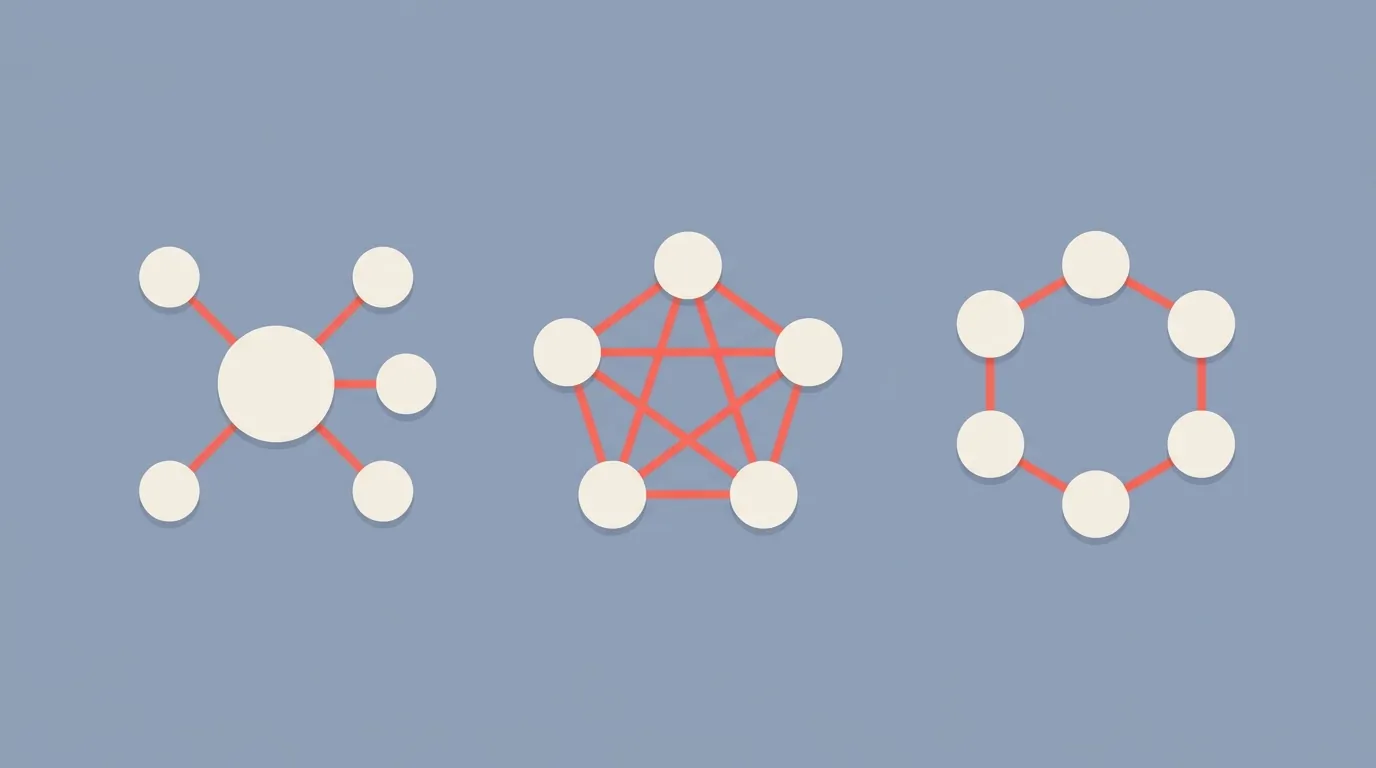
Not every multi-agent system looks the same. There are three patterns I see working in production.
Centralized orchestration
One coordinator agent receives all tasks and delegates them to specialists. Simple. Easy to debug. Works well for teams running fewer than 10 agents.
The downside: the coordinator becomes a bottleneck. Every task flows through a single point.
Hierarchical orchestration
Agents are organized in layers. A top-level agent delegates to mid-level agents, who delegate to worker agents. This scales better, but adds latency.
Event-driven orchestration
Agents subscribe to events and act independently. No central coordinator. Each agent watches for triggers relevant to its job and fires when the conditions match.
This is the hardest to build from scratch. But it's also the most resilient. When one agent goes down, the others keep working. There's no single point of failure.
Which pattern fits your use case? It depends on how many agents you're running and how tightly they need to coordinate. Most teams start centralized and migrate toward event-driven as they scale. Don't jump straight to the complex pattern.
The protocol layer: MCP, A2A, and why they matter
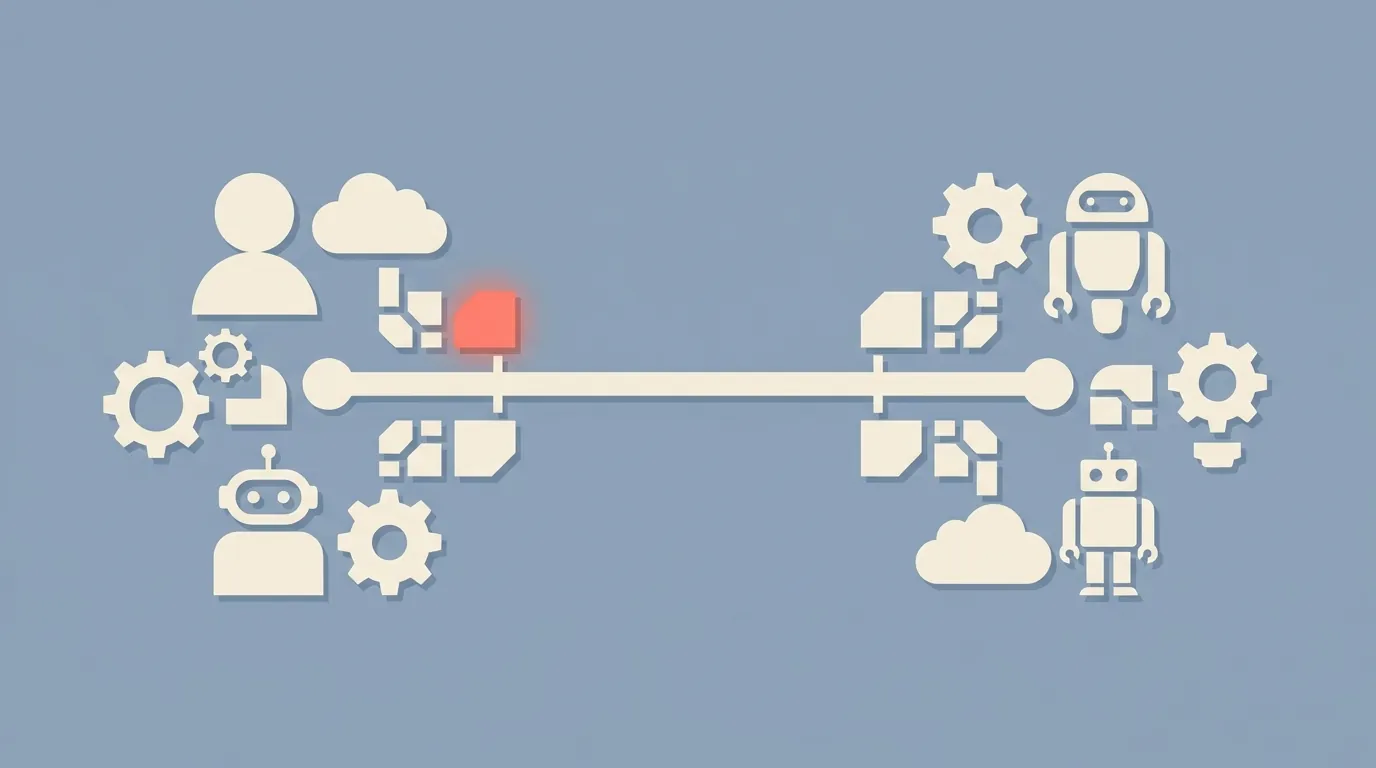
Microservices needed HTTP and REST to talk to each other. Agents need their own protocols.
Two have emerged as front-runners in 2026.
MCP (Model Context Protocol), created by Anthropic, standardizes how agents connect to tools, databases, and APIs. Before MCP, every integration was custom code. Now, if your API supports MCP, any agent can use it out of the box.
A2A (Agent-to-Agent Protocol), from Google, handles something different: how agents from different vendors communicate with each other. Agent discovery, task handoff, status updates. Think of it as DNS plus HTTP for the agent world.
These protocols are doing for agents what REST did for web services. They're turning custom integration work into plug-and-play connections.
TranscriptAPI, for example, supports MCP natively. That means any AI agent (Claude, ChatGPT, Cursor) can pull YouTube transcripts without a single line of integration code. Just connect and go.
Before MCP, integrating transcript extraction into an agent pipeline meant writing custom HTTP calls, handling auth, parsing responses, and managing errors. Now it's a config file and a connection string. That's the difference protocols make.
Want to see MCP in action? Our guide on giving AI agents access to YouTube data via MCP walks through a real implementation.
What an orchestration platform actually does
Here's where most teams struggle. They build the agents. They pick the protocols. Then they realize they have no way to manage the whole thing.
An orchestration platform is the control plane. It handles:
Skill management — what each agent can do, stored as reusable capabilities
Persistent memory — context that carries across sessions and agents
Scheduling — recurring tasks, one-off future execution, cron-style automation
Delegation — agents handing off tasks to other agents, with status tracking
Credential management — secure access to APIs and external services
Without this layer, you're duct-taping agents together with shell scripts and prayer.
Control Room (CRHQ) is one platform built specifically for this. It treats agents as first-class citizens with skills, memory, and scheduling built in. You define what each agent can do, what it remembers, and when it runs. The platform handles the rest.
I'm biased here because we use it ourselves. Our marketing agent at TranscriptAPI runs on CRHQ. It monitors YouTube channels, generates social posts, manages project documents, and schedules recurring content. All without manual intervention.
A real example: how we wired it up
Let me make this concrete.
At TranscriptAPI, we needed a system that could:
Monitor YouTube channels for new uploads
Pull transcripts from new videos automatically
Generate social media content based on those transcripts
Schedule and publish posts at optimal times
Track what's been processed so nothing gets duplicated
With a single agent, this would be a tangled mess. With a multi-agent setup on CRHQ, each step maps to a capability.
The YouTube skill handles channel monitoring and transcript extraction. The writing skill generates posts matched to our brand voice. The scheduling skill manages timing. And persistent memory tracks what's been processed.
Each piece works independently. If the writing skill needs an update, nothing else breaks.
That's the whole point.
For a hands-on example of multi-agent orchestration, see how to build a YouTube monitoring agent that chains RSS feeds, transcript extraction, and LLM analysis.
The four mistakes teams make with multi-agent systems
After watching dozens of teams try this, I see the same errors repeat.
1. Too many agents, too early.
Start with two or three. Add more when you feel the pain of overloaded responsibilities. Don't pre-optimize for a scale you haven't hit.
2. No shared memory.
Agents that can't remember what other agents did will duplicate work, contradict each other, and confuse users. Persistent memory across agents isn't optional.
3. Skipping the orchestration layer.
"We'll just chain them together with API calls." That works for a prototype. In production, you need scheduling, error handling, delegation tracking, and credential management. Build or buy an orchestration platform.
4. Ignoring observability.
When Agent B produces garbage output, was it Agent B's fault? Or did Agent A feed it bad input? Without logs and tracing across the full agent chain, debugging is guesswork.
Who needs this and who doesn't
Let's be honest. Not every project needs multi-agent architecture.
You probably need it if:
Your AI system handles more than 3 distinct types of tasks
You're hitting context window limits
Different parts of your pipeline need different models or tools
You need recurring, scheduled AI work (not just on-demand)
Multiple team members need to modify different capabilities independently
You probably don't need it if:
You're building a single-purpose chatbot
Your entire AI workflow fits in one prompt chain
You're in early prototyping and still figuring out the use case
Start simple. Evolve when the monolith starts hurting.
How to get started today
If you're ready to try this, here's a practical path.
Pick one workflow to decompose. Choose something you're already doing with a single agent that feels brittle or overloaded.
Identify 2-3 distinct responsibilities within that workflow. Those become your first agents.
Define the skill interface for each. What does each agent take as input? What does it produce?
Choose your orchestration approach. Centralized is the easiest starting point.
Set up shared memory. Even a simple key-value store works at first. Agents need to know what other agents have done.
Wire it together with an orchestration platform. CRHQ, LangGraph, or a custom setup. The tool matters less than having the layer at all.
A great first project: build a RAG pipeline with YouTube transcripts to experience agent-tool integration firsthand.
The bottom line
Gartner predicts that by 2028, 33% of enterprise software will include agentic AI. That's up from less than 1% in 2024.
The teams that win won't be the ones with the best models. They'll be the ones with the best architecture around those models. Specialized agents. Clean protocols. A real orchestration layer.
We learned this lesson with microservices. We paid for it with years of painful migrations, half-broken service meshes, and distributed system headaches we didn't anticipate. With AI agents, we have a chance to get the architecture right from the start.
The tools exist. The protocols are maturing. The orchestration platforms are production-ready.
So here's the question: is your current AI system a monolith waiting to be split apart?
Frequently Asked Questions
- What is agentic AI architecture in plain terms?
- It's a system where several specialized AI agents work together, each with a clear job, its own tools, and a coordination layer managing how they communicate. Instead of one agent trying to do everything, you have a research agent, a writing agent, a data agent (say, one that pulls YouTube transcripts through a tool like TranscriptAPI), a scheduling agent, and an orchestration layer that routes each task to the right specialist — a team, not a single tool.
- Why do single-agent AI systems fail at production scale?
- Three failure modes appear. The context window fills up as one agent juggles too many responsibilities in a single prompt chain. Hallucination rates rise when it switches between unrelated tasks in the same context. And debugging becomes impossible because you can't isolate which part broke. One team spent three weeks chasing confusion between customer-support data and marketing analytics in a single agent, then split it into two agents in an afternoon and the problem vanished.
- How does multi-agent AI parallel the microservices revolution?
- Around 2010, monolithic apps buckled under complexity — one change broke three modules, deployments dragged, and scaling meant scaling everything — and the industry answered with microservices: small, focused services with single responsibilities. Multi-agent AI is the same move applied to agents. Gartner reported a 1,445% surge in multi-agent system inquiries between Q1 2024 and Q2 2025, a sign that developers are hitting the same wall with AI monoliths and reaching for the same structural fix.